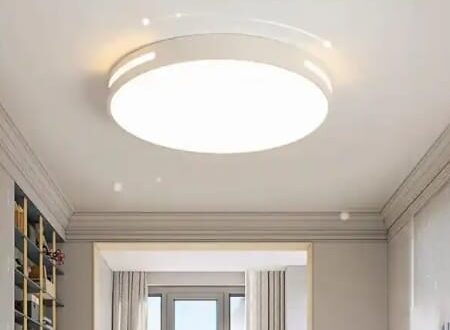
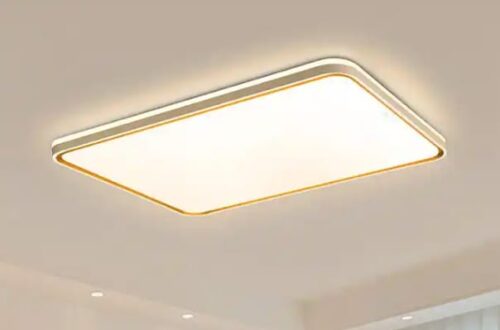
People have been using LED lights since very early on. Nowadays, LED lights are ubiquitous in every corner of our lives. Let me introduce you to the types of LED lights and LED beads
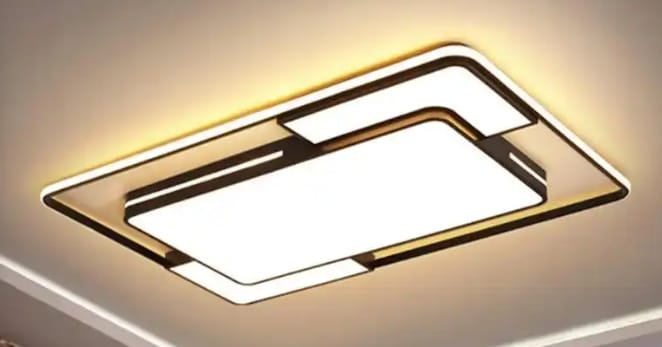
LED lights
LED lights are light-emitting diodes that use a semiconductor crystal to directly convert electrical energy into light energy.
LED lights are gradually growing in the market and can be applied to various occasions.
1. Exterior lighting of buildings
Generally, LED spotlights are used, which have a more concentrated and bright beam of light.
2. Landscape lighting
Because LED lights are not all glass bulbs, they can be used for long-term outdoor lighting. For example, street lamps, stairwells, and garden landscape lighting. Nowadays, there are very concealed LED lights designed to be hidden in low flowers and shrubs, giving the night view a unique flavor.
3. Identification and indicative lighting
Mostly used in places that require introductory language and identification signals. For example, some emergency exit lights, cinema lights, vehicle lights, etc.
4. Indoor space display lighting
Because LED lights do not emit heat or ultraviolet or infrared radiation, they will not damage exhibits or food. So it is usually used in museums, sales counters, pastry shops, etc. LED lighting makes items look clearer and more charming indoors. The bright color of the cake naturally requires the effect of lighting.
5. Entertainment venues and stage lighting
LED lights can come in various colors, so their presence is certainly indispensable on a dazzling stage. Some restaurants also use colored lights on the walls to create different atmospheres and increase appetite, among other things. Of course, there are also some festive lanterns that create a warm atmosphere for our festival.
6. Video Screen
The ultra-high brightness, different colors, and resolution of indoor and outdoor LED displays have improved people’s enjoyment of life.
Characteristics of LED fluorescent lamps
Good quality, durable, long service life, energy-saving and environmentally friendly, waterproof, moisture-proof, leakage proof, high temperature resistant. The outer cover can be made of glass or PC material, and can also adjust the light source for different temperatures. The colors are colorful and can be made into different shapes.
Types of LED beads
1. According to the color of the light beads: red light, green light, yellow light …..
2. Starting and ending LED lights are divided into: low-power LED lights (direct insertion, SMD surface mount), high-power LED lights
The direct insertion low-power specifications include:
Straw hat/steel helmet, round head, concave, oval, tombstone type (2 * 3 * 4) bullet head, flat head, (3/5/flat head/bread type) piranha, etc.
SMD patches: 3020/3528/5050, these are front emitting; 1016/1024 and others are side emitting light sources.
3. Classified by the characteristics of the light emitting surface: circular light, square light, rectangular light. Surface emitting tube, lateral tube, microtube, etc.
Choose LED light beads
1. The brightness of LED beads varies, and their prices also differ. Of course, the brighter, the more expensive it is
2. Same color, the purer the color, the higher the price.
3. LEDs with different emission angles have different emission angles for different purposes. Special emission angles, such as full diffuse angle, are more expensive.
4. The longer the lifespan, the higher the price.
5. The quality of large chip LED is better than that of small chip LED, and the price is higher.
6. Production materials: Many LED lights used in outdoor or entertainment venues contain materials that are fire-resistant, pressure resistant, leak proof, etc., and their prices are correspondingly high.
Difference between LED beads and surface mount
1. Angle: The angle of the LED bead is made very small, which means that the light is relatively concentrated and has a long range, but the illumination range is limited; The general angle of LED patches is very large, which results in scattered light and a wide illumination range, but the range is relatively short.
2. Luminous principle: LED beads use discharge to emit light, while LED chips use cold light emission.
3. Seismic resistance: The seismic resistance of LED beads is not as good as that of LED patches.
4. Light color: LED beads can emit light in various colors such as red, orange, yellow, and green, while LED chips do not have this ability.
5. Environmental protection function: LED chips do not contain harmful metals such as mercury. In comparison, LED chips are not well made in terms of environmental protection.
LED beads and patch classification
1. Direct insertion LED
The electrical connection adopts a 2-pin direct insertion form, which is a traditional and low-end product. Due to the high thermal resistance of the packaging and the difficulty of chip heat dissipation, the light efficiency decays quickly and the lifespan is short. The advantage is that it is cheap and can be made into a very small light emission angle.
2 TOPLED
The electrical connection adopts the 2, 4 or 6-pin patch method, which is currently the commonly used light source. According to the size of the package, it can be divided into specifications such as 0805, 1206, 3528, 3535, 5050, 5060, etc. The larger the package size, the better the heat dissipation performance, the higher the power it can withstand, and the more light energy it can output.
3. Piranhas
It is a 4-pin direct insertion packaging form, with better heat dissipation performance and reliability than ordinary 2-pin direct insertion, and can withstand a working current of 50-70mA. It is currently a commonly used light source.
4. High power LED
LEDs designed and produced using large-sized chips and reinforced hot channel technology are usually divided into specifications such as 0.5W1W3W5W. A single 1W LED can withstand a working current of over 300mA and output a luminous flux of over 100 lumens. They are widely used in civil and commercial lighting, traffic control, photography, night vision, and other fields. The price of high-power LED is still relatively high. With the gradual maturity of the technology, it has the hope to completely replace traditional lighting sources and lead the world into an era of solid-state light sources.
Do you guys have a better understanding of the ubiquitous LED lights in our daily lives? You won’t be confused when choosing LED light beads next time, will you. The above is the relevant content about the types of LED beads, hoping to be helpful to everyone!